Tuesday, 10 November 2015
music video first day filming
yesterday me and my group filmed part of the music video. we filmed at Kane's house and got a lot done. I was the camera man for the shoot and we got the shots done in a couple of hours.

Thursday, 5 November 2015
Wednesday, 4 November 2015
Assignment
Editing has changed a lot over the years, lumiere brothers changed the was photography was looked at. The lumiere brothers dad use to make the photography equipment. Louis started trying new things with the equipment and he found a new dry plate process in 1881. The 'dry plate' process is now known as the 'Etiquette Bleue' process and helped his fathers business.
Kuleshov effect. The kuleshov effect was a short film edited together to make the audience think that the person in the film was changing his expression when he looked at different things however it was actually the same shot each time. He was looking at three different things on being a plate of soup, a girl in a coffin and a woman on a divan, when he was looking at these thing the audience thought the expressions were hungar, grief or desire but in actual fact it was the same shot and expression all three times. In my opinion the kuleshov effect is explained the best by Hitchcock as it has a sense of humour here it is.
Fast cutting is a film editing technique which refers to several consecutive shots of a brief duration (3 seconds or less). It can be used to convey a lot of information very quickly, or to imply either energy or chaos. Fast cutting is also frequently used when shooting dialogue between two or more characters, changing the viewer's perspective to either focus on the reaction of another character's dialog, or to bring to attention the non-verbal actions of the speaking character
Shot reverse shot is a film technique where one character is shown looking at another character, and then the other character is shown looking back at the first character. Since the characters are shown facing in opposite directions, the viewer assumes that they are looking at each other. A good example is in Spiderman https://www.youtube.com/watch?v=h0xiCIMIwLY
DW Griffiths changed the way editing was looked at, he was much more livelier when cuting his scenes . He would shoot from different angles and distances and cut them and put them together. Edwin S Porter wasn't as lively, he took a more causious approach when cutting and he would cut them so they were Brocken into different scenes. Edwin S Porter made the great train robbery in 1903, the great train robbery was a one reel film. One reel film, The one reel film has a running time of twelve minuets and was made in twenty different shots and included a close-up of a bandit firing at the camera. The film had as many as ten different outdoor and indoor locations. No film had done this before.
Kuleshov effect. The kuleshov effect was a short film edited together to make the audience think that the person in the film was changing his expression when he looked at different things however it was actually the same shot each time. He was looking at three different things on being a plate of soup, a girl in a coffin and a woman on a divan, when he was looking at these thing the audience thought the expressions were hungar, grief or desire but in actual fact it was the same shot and expression all three times. In my opinion the kuleshov effect is explained the best by Hitchcock as it has a sense of humour here it is.
Editing is used so the bad parts of what is recorded can be
cut out and not seen in the final product. Editing is also used in the
relationship of the genre, development of drama, engaging viewer and creating
motivation.
The purpose of editing can be seen as being very significant; the
editing itself is effective as it sets a meaning for the film one good example
would be the bourne ultimatum in the chase scene. It cuts between bourne running
through houses jumping and a woman walking in a house then when the action
starts it cuts even faster and while it’s doing this it is building up tension
and gets your heart racing.
Fast cutting is a film editing technique which refers to several consecutive shots of a brief duration (3 seconds or less). It can be used to convey a lot of information very quickly, or to imply either energy or chaos. Fast cutting is also frequently used when shooting dialogue between two or more characters, changing the viewer's perspective to either focus on the reaction of another character's dialog, or to bring to attention the non-verbal actions of the speaking character
Shot reverse shot is a film technique where one character is shown looking at another character, and then the other character is shown looking back at the first character. Since the characters are shown facing in opposite directions, the viewer assumes that they are looking at each other. A good example is in Spiderman https://www.youtube.com/watch?v=h0xiCIMIwLY
Prep for editing
When preparing for editing it is important to check material. Checking Material is good because if the material isn't as good as you like, before you pack away and the cast and crew leave you can shoot it again. Another thing I think is important is that you set the material to the correct import settings, this will help when you come to edit it and it will save time doing it later. Creating bins is important because when you are editing it is good to have everything ready so you can do the edit with in your time frame. Creating bins is also important because you would have every thing in the correct file and place ready for editing. Producing a edit list is important because it will tell the editor which take you will use, notes describing the shots and a list of shots filmed, this will save time editing because if you start editing and find out the director isn't happy with that particular shot you will have to start again. Marking up a script is important so you can make adjustments where needed for example if a character is saying something and they aren't doing it the way you would like them to you could change the way it is said so you are satisfied with it. Another reason marking is important is because you can choose the location of the scene if your not happy with the first one. Synchronising the rushes is important because if there is a voice over in the film and the person on the screen is not speaking it might look bad. A rushes log is also important so you know what you have shot, what you are going to shoot and what not to shoot this will save time when coming to film. Labelling the tapes and SD cards is important so you know which tape/SD card is which and so nothing is lost.
Monday, 2 November 2015
Back to the future review
Back to the future also known as bttf, was released on December 4th 1985 and to many it is one of the best films ever made. In the film it is packed full of exciting moments, romance (well not loads of it) and scenes which will make you say WOW. The main character Marty Mcfly played be Michael J Fox is just like any other person he goes to school which he's late for in the first couple of minutes in the film. It starts of by Marty Mcfly lung to docs house/work area to see where he is however when he gets there he's not there and there's a load of dog food on the floor. The doc is played be Christopher Lloyd and he is a scientist a bit of a mad one, he is always doing new experiments or just trying something new. What the doc does sort of rubs of onto Marty because he does his own one, in the docs place Marty has made a huge amplifier which he plugs his guitar in and stumps the guitar and it is so power full it takes him off his feet and sends him flying. In my opinion this is one of the funniest parts of the film as it is unexpected and you really don't think he will fly into the shelves and break everything. After this he gets a phone call from the Doc saying don't turn on the amplifier because it is too powerful and that he wants Marty to meet him in the mall car park at around 1 or 2 in the morning and bring a camera a with him. When Marty gets there the docs tells him he's made a time machine out of a de Loren. After doc explains how everything works the Libyans turn up and shoot the doc multiple times and Marty gets in the car and it reaches 88 mph and goes back to the future to 1985. Unfortunately he can't get back because he doesn't have enough plutonium or 1.21 jigerwats or electricity to get him back. Marty goes to see young doc and askes for help, after a bit of convincing that it was actually his invention Marty show doc a leaflet saying the clock tower anniversary and it turns out to be that day. The doc says lightning is the only thing capable of making that much electricity. Marty needs to get the electricity from the lightning which hits the clock tower and make it hit the car so he can go back. While the doc is thinking of a way for this to happen Marty sees his parents as youths and accidentally intervenes, now his mum thinks he's called Calvin Klein because that's the underwear he has on and his mum fancy some him or as the Americans say she has a crush on him which is a bit weird. As this is happening martys family is slowly disappearing and it's a race against the clock. Marty has to fix it and get back home while dodging the school bully biff. Long story short he manages to make his dad and his mum get together after martys dad punches biff, Marty than realises that he doesn't have much time so he rushes back and to find the doc who is setting up the experiment and things go wrong it unplugs because of a fallen branch from a tree and the doc eventually fixes it. Marty is in the car ready to go he gets the signal be a alarm clock and he try's to start the car and it wouldn't start after about a minute of try it work he drives to 88 mph and hits the wire and he's goes back to the furture back where he started. When he gets back his life is great Nd his family are wealthy and biff the bully is now waxing the family's cars.
Thursday, 22 October 2015
Camera Operator
Preparing and operating the camera and all its equipment and working with the Director and Director of Photography to achieve the visual style of the film managing other camera department staff and communicating with Actors.
Things I will need to do.
know how to operate the camera expertly
have good working knowledge of all camera systems, lenses, support equipment and accessories
provide creative input
have artistic ability
be patient
have a good sense of visual composition, perspective and movement
have physical co-ordination and strength
combine creativity with technical skills
pay precise attention to detail
communicate effectively
be able to collaborate and work as part of a team
be diplomatic and sensitive when working with artists and crew
know about health and safety legislation and procedures
Things I will need to do.
Tuesday, 20 October 2015
What Back To The Future tought us about script writing
Michael J Fox
Michael Andrew Fox, OC (born June 9, 1961), known as Michael J. Fox, is a Canadian-American actor, author, producer, and advocate. With a film and television career spanning from the 1970s, Fox's roles have included Marty McFly from the Back to the Future trilogy (1985–1990); Alex P. Keaton from NBC's Family Ties (1982–1989), for which he won three Emmy Awards and a Golden Globe Award; and Mike Flaherty in ABC's Spin City (1996–2001), for which he won an Emmy, three Golden Globes, and two Screen Actors Guild Awards.
Fox was diagnosed with Parkinson's disease in 1991 and disclosed his condition to the public in 1998. Fox semi-retired from acting in 2000 as the symptoms of his disease worsened. He has since become an advocate for research toward finding a cure; he created the Michael J. Fox Foundation, and on March 5, 2010, Sweden's Karolinska Institutet gave him a honoris causa doctorate for his work in advocating a cure for Parkinson's disease.

In one part of the interview he says "The script was rejected over 40 times. You have to be crazy to want to be in the film business and you have to be able to take a lot of rejection because, as screenwriter William Goldman says, 'nobody knows anything.' We were told over and over again 'Ha, it's a Time Travel movie never makes any money.', 'Oh it's nice and sweet, nobody wants to see something nice and sweet.', 'Why don't you guys take this to Disney? This could be a Disney movie. 'And this was when Disney was a complete mess"
Michael Andrew Fox, OC (born June 9, 1961), known as Michael J. Fox, is a Canadian-American actor, author, producer, and advocate. With a film and television career spanning from the 1970s, Fox's roles have included Marty McFly from the Back to the Future trilogy (1985–1990); Alex P. Keaton from NBC's Family Ties (1982–1989), for which he won three Emmy Awards and a Golden Globe Award; and Mike Flaherty in ABC's Spin City (1996–2001), for which he won an Emmy, three Golden Globes, and two Screen Actors Guild Awards.
Fox was diagnosed with Parkinson's disease in 1991 and disclosed his condition to the public in 1998. Fox semi-retired from acting in 2000 as the symptoms of his disease worsened. He has since become an advocate for research toward finding a cure; he created the Michael J. Fox Foundation, and on March 5, 2010, Sweden's Karolinska Institutet gave him a honoris causa doctorate for his work in advocating a cure for Parkinson's disease.
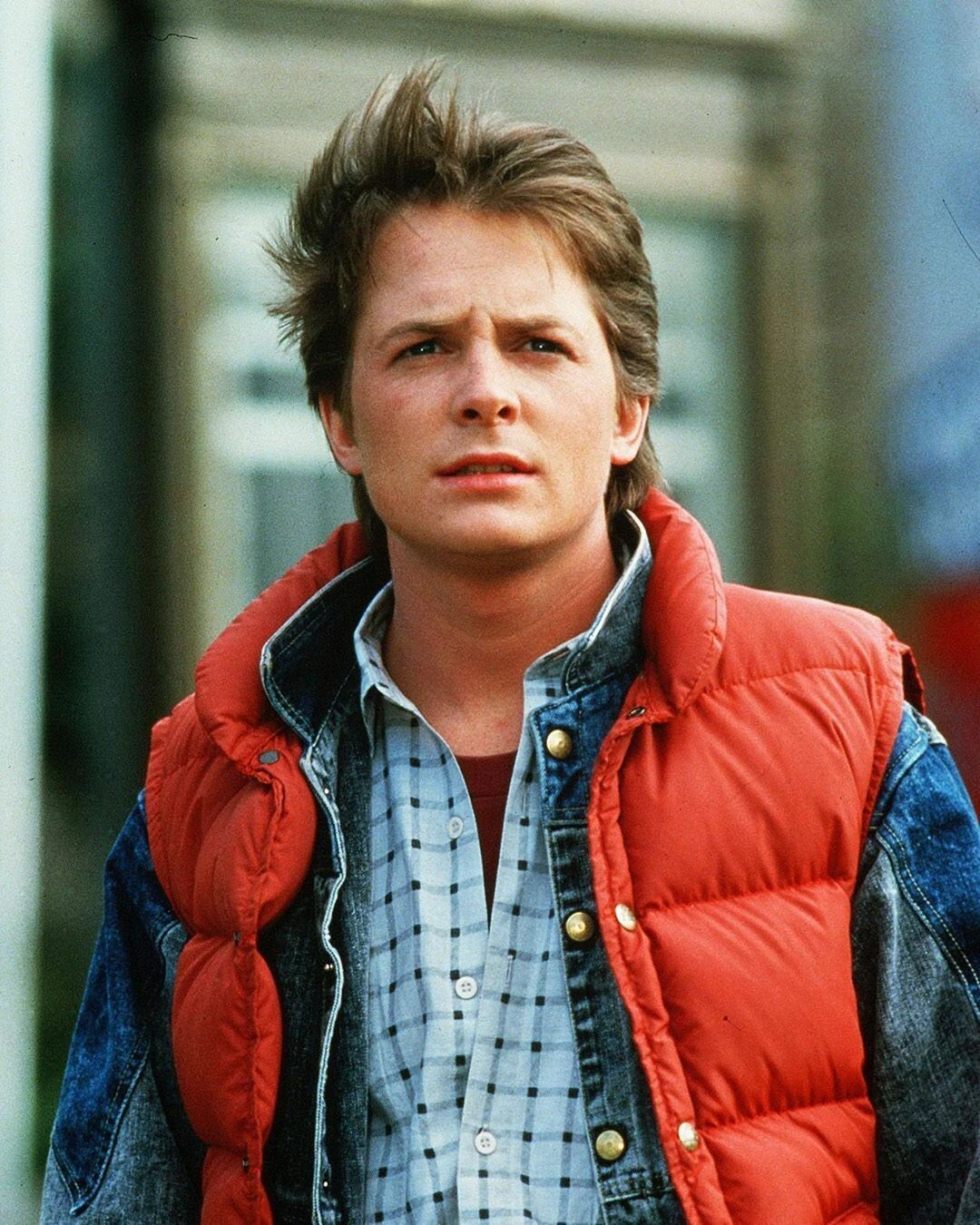
Since 2001, Fox has mainly worked as a voice-over actor in films such as Stuart Little and Disney's Atlantis: The Lost Empire. On the CBS TV show The Good Wife, he earned Emmy nominations for three consecutive years for his recurring role as crafty attorney Louis Canning. Fox has also taken recurring guest roles and cameo appearances in Boston Legal, Scrubs, Curb Your Enthusiasm and Rescue Me. He has released three books: Lucky Man: A Memoir (2002), Always Looking Up: The Adventures of an Incurable Optimist (2009), and A Funny Thing Happened on the Way to the Future: Twists and Turns and Lessons Learned (2010). He was appointed an Officer of the Order of Canada in 2010. This is him in back to the future.
In one part of the interview he says "The script was rejected over 40 times. You have to be crazy to want to be in the film business and you have to be able to take a lot of rejection because, as screenwriter William Goldman says, 'nobody knows anything.' We were told over and over again 'Ha, it's a Time Travel movie never makes any money.', 'Oh it's nice and sweet, nobody wants to see something nice and sweet.', 'Why don't you guys take this to Disney? This could be a Disney movie. 'And this was when Disney was a complete mess"
Subscribe to:
Posts (Atom)